Tag: strategies

  • What Is The Best Font for ADHD?

    What Is The Best Font for ADHD?

    In 2020, I published ADHD and the Use of Sans Fonts: Do They Make a Real Impact on Legibility? Since then, it’s become one of the most-read posts on this blog — which tells me that many hyper-neurodivergents are indeed wondering which is the best font for ADHD.

    I also believe that the original article may be too technical, so here’s an ADHD-friendly version of it, along with a few reflections and a cool note on a font designed for dyslexics.

    Please note: this discussion is about trying to read something we’re interested in — but just can’t. For a deeper understanding, check out the original post first.

    What are the Styles of Fonts?

    For the purpose of this discussion, I focused on two: the “Serif” fonts (those with curly ends) and the “Sans” fonts (those without).

    Is There a Best Font for ADHD?

    To this date, there’s no research confirming the existence of an ADHD-friendly font, or whether the use of certain fonts could help neurodivergents at all.

    However:

    1. I made my case that sans fonts are the most ADHD-friendly, based on my own experience, Dr. K’s, and an article published by McKnight (2010).
    2. I recently discovered a new font created for dyslexics (who are also neurodivergent).
    3. And the fact that so many people Google “ADHD fonts” and end up here — well, that says a lot.

    Why “Sans” is the Best Font Style for ADHD?

    Previously, I mentioned a subjective reason: for me (and Dr. K, who is also ADHD), sans fonts are clearer. Now I’d like to explain why. 

    Is This Impulsivity?

    Basically, text written in a serif font (like Times New Roman) looks like a blur of words my brain can’t distinguish:

    • A paragraph feels like a single block of words, so
    • keywords don’t pop out at first sight, and
    • I feel a rush to move on to the next paragraph.

    A copy not written in sans fonts — even when I’m interested in it — doesn’t help me read word by word. I get eager to move forward, and I end up reading nothing.

    Is This Distractibility?

    Here’s another funny thing that might sound silly: as a blogger and web designer, I love serif fonts. As a writer, they make me feel more “writerly.” So here’s what happens:

    Sometimes, when I’m reading The New Yorker’s website — which has the most beautiful serif font — I start wondering if “maybe now I could use it.” I then spend a good amount of time searching for a free look-alike version, only to try it and think, “You’ve procrastinated again.” 🤦🏻‍♀️

    How to Choose an ADHD Friendly Font? Procrastination Alert

    Edit by Laly York

    When searching for a font for ADHD, we can easily end up procrastinating — looking for the prettiest, most popular, or most recommended. Been there, done that.

    “Reading is your goal.” Keep that in mind.
    A humble suggestion:

    1. Start with Open Sans.
    2. Stick with it for at least a few days.
    3. If you’re still struggling, try another one.

    Also remember that font size and line spacing (or “line height” on websites) matter.

    In Microsoft Word, I use size 12 with multiple line spacing set to 1.7 (1.5 isn’t enough — and it makes a huge difference for me). I also write with the zoom at 170% to avoid using my glasses. 🤷🏻‍♀️

    Is There Something Written about the Use of Sans Fonts for ADHD?

    So far, I’ve only found guidelines for designing books for children.

    As I mentioned before: “When we’re kids, we start learning to write with block letters — which makes perfect sense: we learn the alphabet one letter at a time, and only then do we begin to put them together to create words.”

    One letter at a time is what my ADHD brain needs — and I realized this in law school (undiagnosed, by the way).

    Recently, I was surprised to learn that there are other neurodivergents who need exactly the same: those with dyslexia.

    Dyslexic Friendly Fonts and Its Relationship with ADHD Friendly Fonts

    For dyslexics, words themselves are the issue. Fortunately, there has been a lot of progress in the digital world to support them.(1) 

    One of the things that struck me the most was the development of a font designed specifically for their needs.

    As you can see in the image, “Open Dyslexic” (2) has letters that are:

    • wider (the x-axis is increased), which consequently increases the space between the letters, and
    • heavier at the bottom so that dyslexics don’t flip letters such as b and p.

    One letter a time… 

    How to Change the Font When We Cannot Change Them?

    If you’re reading from a website or book written in serif fonts and it’s giving you a headache, here are a couple of solutions:

    1. Reading from a website: Safari, for instance, lets you choose “Reader View.” This provides clean text displayed in a sans font.
    2. Reading from a book: I scan it, export it as a PDF, and use Adobe Acrobat Pro to change the font. Does it take forever? At first, yes — but I need to read.

    Wrapping It Up

    Since there’s no research on this topic yet, give sans fonts a try.
    Open Sans, by Google, is free to download and install. You might also want to try Roboto, which is thinner.
    If this works for you, please help me — help us — spread the word!

    Footnotes

    (1) In 2008 Dutch designer Christian Boer (who is dyslexic himself) designed the font “Dyslexie”. He presented it at a TED Talk in 2011.

    (2) The font “Open Dyslexic” was designed by Abelardo González and released as open source — meaning you can download it for free.

  • ADHD Brain Freeze and Stagnation: Welcome to the S-Zone

    ADHD Brain Freeze and Stagnation: Welcome to the S-Zone

    Have you ever imagined the person you would hate to become? Have you ever feared it so much that thinking about it was your worst daymare? I have.

    Here it is: It is the end of the world (I shit you not) There are zombies eating brains in the streets; neurotypicals brains only; zombies are not stupid. I am in my sixties; I am a fat old lady, with long grey and messy hair, wearing an NYC hoodie I bought during the Big Bang and to which I held on to with the unbreakable hope of seeing the Big Apple one last time.

    My house – where I’ve been locked up since the zombies arrived – is falling apart. I had started to flip it before “the arrival”, but then, ADHD + zombies = “do cows sleep on their feet?” I live alone; I don’t want to rescue pets because everybody dies or leave, and I can’t handle any more pain.

    I survive. 

    That’s all I do. 

    Oh, my dildo still works.

    I am armed up to my teeth, and I do not ever open the door… But then one day, I see through my window a group of teenagers trying to escape the zombies, and I do; I open my door to them. I welcome them feeling they are disgustingly young and beautiful, while I’m watching how the blondie is about to get chopped by a booby trap I’ve forgotten to mention (oops) 

    They tell me they know about a place where one can build a safe future; they have been running towards it, and they won’t give up. And they want my truck; they saw I have gallons of gas, so they say to me, “let’s fill it up and go! Why didn’t you leave before?” My life flashes before my eyes, a tornado of thoughts hit me, and I can’t answer …

    The zombies break in and I feel one person must stay behind to fight them while the group gets in the truck… The sad truth is I’m too tired to even think about lifting my leg to jump into the truck. So I say, “You go.” And I die; only because I’ve put some of the blondie’s brain over my head; duh.

    But as I’m being eaten, I see them escaping towards their future and I feel envy… I think, “Why didn’t ‘I’ get out? Was I always so tired of surviving that I forgot how to live?” My life flashes before my eyes and my last thought is, “If only I…”

    Now, Seriously

    Years ago, I started writing that story just to vent, because my daymare is pretty much like that and I needed to do some catharsis. I have always feared to become that old lady who lives across the street and gets out from time to time; that one of whom people talk about saying, “They say she had a great future, and no one knows why she didn’t get through.”

    Why am I thinking about this today? Because a few weeks ago I entered – drum roll please – the stagnation zone. 

    That’s how I call it; when we get so burned out that we get stuck for days, weeks… even months if we don’t do something about it.

    How did I get here? Back in December I was juggling with a lot of projects, and a lot of things happened that stressed me out; I should have taken a break as I was taking care of those things, but I didn’t… When those things happened, I felt as if someone had thrown at me three more balls at once; and so eventually I ended up dropping them all, over my fucking my head.

    Living With ADHD and Entering the S-Zone

    You know… When I leave my house, I say to myself, “You’re leaving the house.” (Once again, “I shit you not.”) I can get so distracted in the streets, that my ex-husband used to say I’d die under a bus. 

    That being said, a couple of weeks ago I was crossing a street thinking, “Wait for the white light, the white little figure…” and out of nowhere it hit me: I am about to turn an age that FREAKS ME OUT.

    So right there in the middle of the street, I got to wonder, “What am I doing? What have I achieved? I have nothing. Can I still pull it off?” I felt a rush taking over me, and then I froze. I “dropped the balls,” but I did manage to get to the sidewalk. It’s not my ghost writing this post; chill.

    When I get those seriously negative thoughts, is when I know I have entered the S-Zone; so I refuse them immediately; I block them; I know it’s time to begin my rehab.

    Before my diagnosis, before knowing this was an ADHD thing, I use to fall in long periods of depression, ruminating about how shitty my life was when it wasn’t.

    Just To Be Clear…

    I was going to send a couple of newsletters with a series of posts, so you wouldn’t think I am not working for this blog. I also was afraid to show you how much I struggle because I want you to find strength in my stories…

    But then I wondered, “what if you find comfort in seeing how much I struggle too?”

    I was very doubtful about publishing this post; I didn’t want you to think, “And how about all that gratitude you’ve been practicing, and college, and blah? Was that a lie?” It wasn’t… It isn’t… I still do my thing every morning; I am still excited about coming back to a class; but I am just having “a few of those weeks.”

    When I enter the S-Zone, I can’t do much; I can’t do anything truly productive actually; so I fake a vacation… I decorate my house with a few things from NYC to make it look like a hotel, and I try – “I try” – not to work more than four hours per day, or not to work at all.

    And this is one of the reasons why I decided to post this: because I can stop working, but how about those of us who can’t? The stagnation is an ADHD thing, and I believe we should have the right to ask for a leave of absence at our jobs.

    How Does Stagnation Feels Like?

    The way I see it, this is like having car fueled by solar panels; when it runs out of energy it gets stuck. We could pull it for a few blocks with some help, but it’s not going to get further than that; and how exhausting would be to pull such a dead weight? How much it would hurt us to do so?

    It needs time to recharge, and we need to wait for the sun… Just wait…The more we pull, the longer is going to take us to recover. 

    Why am I still here if I know how to get out? Because after that day I realized I had entered the S-Zone, I didn’t slow down; I kept pulling and pushing… so now I’m paying for it. 

    How to Cope With the ADHD Stagnation

    For the past few days, I surrendered to it with grace. I know it’s going to pass; if I take this downtime the right way, one of these mornings I’ll wake up and I’ll feel recharged; I’ll have new and fresh ideas, I’ll be able to hyperfocus and catch up. The car is not dead nor broken; it just needs a recharge and time. (“ugh, waiting,” I know…)

    It’s a period to do introspection,

    • How did I get here?
    • What’s been stressing me?

    And also a period to pull a Marie Kondo on our brains; there may be unnecessary thoughts getting in the way, or even good projects which need to be on pause. 

    I’ve decided, for instance, that I won’t be taking the finals in the upcoming weeks, and I gave up a project which I wasn’t really working on, but it was getting in the middle. Some of my decisions hurt; but I know is for the best.

    Cleanance and priorities. This is what the period is about. And “pride”, the pride of knowing we live with a chaotic brain and still we kick ass. I shouldn’t have killed the blondie… I am so much cooler than her.

    oOo

    Now, right now, this is all I can do.

    “Sorry” comes to my mind and I say “fuck, no”. I am not going to apologize for my mental health.

    I am not down nor defeated; today I was able to open my heart with no shame and hit publish; and maybe tomorrow I’ll wake up and I’ll see my path clearly again and I’ll resume my life as if nothing had happened

    I am just having a few of those weeks, you know? … I just… I just have ADHD.

    Thank you for reading.

  • How Studying Can Be the Ultimate ADHD Brain Training Strategy

    How Studying Can Be the Ultimate ADHD Brain Training Strategy

    The times I’ve told someone with ADHD, “have you considered taking a course, studying something?”, they looked at me as if I had told them, “have you considered going to the dentist?” It’s as if they’d sensed I’ve seen a crooked tooth or something and fixing it is going to hurt.

    Studying with ADHD can be a challenge for many of us, and even something that feels impossible to achieve; for me, it has been a recovery place, a training strategy.

    And this is what I did after practicing gratitude had re started my engines; this is the second step I took to gain control of my life and purpose.

    Let’s Get Something Clear

    Question! When you think about getting an education, what do you think of? Do you think about a structured and boring thing that’s going to take a long time? It doesn’t have to be like that…

    Example! In case you feel I’m telling you that have you a crooked tooth: I found a free tutorial on Web Design (for our Instagram Posts!) that’s super cool: it’s split in like eight videos of 2 minutes or so. 🤗

    After having watched it, the outcome was a quick, fun and effective boost of dopamine, and… knowledge!

    When I invite someone to consider “taking a course”, I am not preaching “go to school.” All I am saying is,“take your brain for a run, with a goal.” It’s exercise!

    If we think about education, outside the box and in a very brief way, it is simply a clear and rewarding path towards a goal; that goal can be a cool Instagram post or the neuroscience behind ADHD.

    How Education Can Be a Training Place for Our ADHD Brain

    You know…, people treat me as if I was a nerd/weirdo when I say that studying saved my life, more than once; and even though I am a nerd and a cool weirdo 🤷🏻‍♀️, there’s much more behind that. 

    Quick story! When I began recovering emotionally from my brain collapse (when I couldn’t even remember my own signature), I took a few and short online courses on Web Development.

    Besides being useful for me, I was interested in the abstract knowledge, in a place where I would hyperfocus on semicolons and brackets instead of words. Coding, in my case, leaves no room for bad or futile thoughts.

    During the first weeks I was able to pay attention to the videos for 15 minutes or so; then 30, an hour, two, three… After three months, I was happier and willing to write again, … and I recalled how to sign a document with my name 🥴.

    I also say very often “this or that helped me saving my life”, which may lead one to believe that I am underestimating the concept of saving one’s life; but I am not. I have lived for decades surviving traumas with an untreated ADHD, and studying played a huge role in my survival.

    Getting an education is for me like a skateboard I jump in to move forward, to leave a bad state of mind quickly and to feel “rewarded.”

    From Practicing Gratitude to Exercising Consistency

    By August of 2021, I was sort of achieving a masters on practicing gratitude, but I was also a tiny bit afraid of failing again and letting the wakeup call boost fade away. And it was August! That’s when I get the “August rush”, remember?

    I was on the right path, but I wasn’t at my best yet. I wanted to come back to this blog and I couldn’t write for more than two hours per week; hence, I needed to practice “consistency, commitment.”

    So! I chose to resume a career I had to put on hold in 2007 because, well, back then I was an adult with an undiagnosed ADHD and studying wasn’t as easy as it had been when I was in my twenties; the undesired symptoms, they do get worse with age.

    One may think why I didn’t choose something simpler and short-termed; but in this case, for me it was. I came back to the same University, thus they recognized me half of the semester I had passed in 2007.

    And, above all, I had a very clear vision of what I was going to do and why.

    Setting Our Own Goals

    When I signed up, I did something that I consider very important for us with ADHD: I set for myself my own goals, regardless of what was expected of me. I thought,

    “I don’t know if I’ll be able to study this much again, at this age, while I’m working. So, I’m just going to focus on attending the classes and passing the mid-term tests; if I can take the finals too, awesome; if not, I’ll take them on March.”

    Furthermore, since I still work for my dream of moving to NYC for good, the world is such a mess and I didn’t know what would happen this year, I also said to myself,

    “Right now it’s not my goal to finish this career; I just wanna study this semester. And I am going to take it as test for myself; if I can do it, awesome; if I can’t, I’ll see what else I’d need to do.”

    The Outcome

    It was freaking painful 🤦🏻‍♀️.

    But I did it! And I passed two classes with a 100% and one with a 90%. How-about-that!

    Doing that semester helped me with the following, for instance:

    • I remembered I used to use “weekly planners” (instead of “daily planners”) to cope more efficiently with my time-blindness;
    • I had to work in groups (ugh, righ?) and bit by bit I re gained more control over my hyperactive brain and my emotions, and I was able to be forgiven and patient with those humans thinking inside the boxes (#sorrynotsorry)

    Studying is not only about the degrees but also about what it can do for us.

    An ADHD Training Place

    When we search for tools to cope with our ADHD, we look for ADHD coaches, apps for ADHD, fidgeting toys… “Ugh.” Why would we rely on things to get better, when we can train our brains, by ourselves, to rely on it? Wouldn’t you like to rely on your brain, and nothing but your brain?

    We struggle a lot with our executive functions and the lack of dopamine, and what they do to us; a learning process, no matter how short, can help us with all of that.

    “But Laly, I don’t know how study!” Let me tell you, with all my years in college, I didn’t know how to study web development… I had no idea where to start, and I figured it out. Because we are creative; we think outside the box; we can find our own ways. Furthermore, we don’t need to know “study techniques” for quick webinars or tutorials; c’mon!

    Taking a course allows us to (beyond the knowledge we’d be gaining of course): 

    • have a clear goal to hold on to. Purpose, check!
    • have small challenges (the tests!). Dopamine boost, check!
    • work on our executive functions to manage the time, the tasks, etc;
    • and if the classes need our presence, we get to meet new people and work on our social skills;

    Bottom Line Is…

    Whenever I feel stuck, I do this: I take my brain for a run and I set my own rules; if I sign up for something that may take a long time, I split it and set short term goals for myself. This is what I did with college last year. And about those coding courses I took (in 2017), the first one was 6 weeks long, the second one was 8 weeks long, and so on.

    One last story: when I was living in Vegas, with like 40 bucks left on my bank account (I shit you not), I watched a free webinar on photography that was probably an hour and a half long. I learned so much, that I put it in practice for my photos, and then someone saw my Instagram grid and hired me!

    Therefore, my dearest hyper neurodivergent, I’ll leave you with one humble advice: If you’re feeling stuck and with lack of purpose, think about what you truly enjoy doing; then search for course at put that brain in motion! No matter how small. This is about what it can do for you… and you never know where new knowledge can lead you 😉 

  • How to Drive a Manual Brain

    How to Drive a Manual Brain

    Perhaps I should resume this new blog by telling you why I am specializing on ADHD coaching; but, since I left a hint on my previous post and recently someone asked me “What is an ADHD coach”, my brain took another turn.

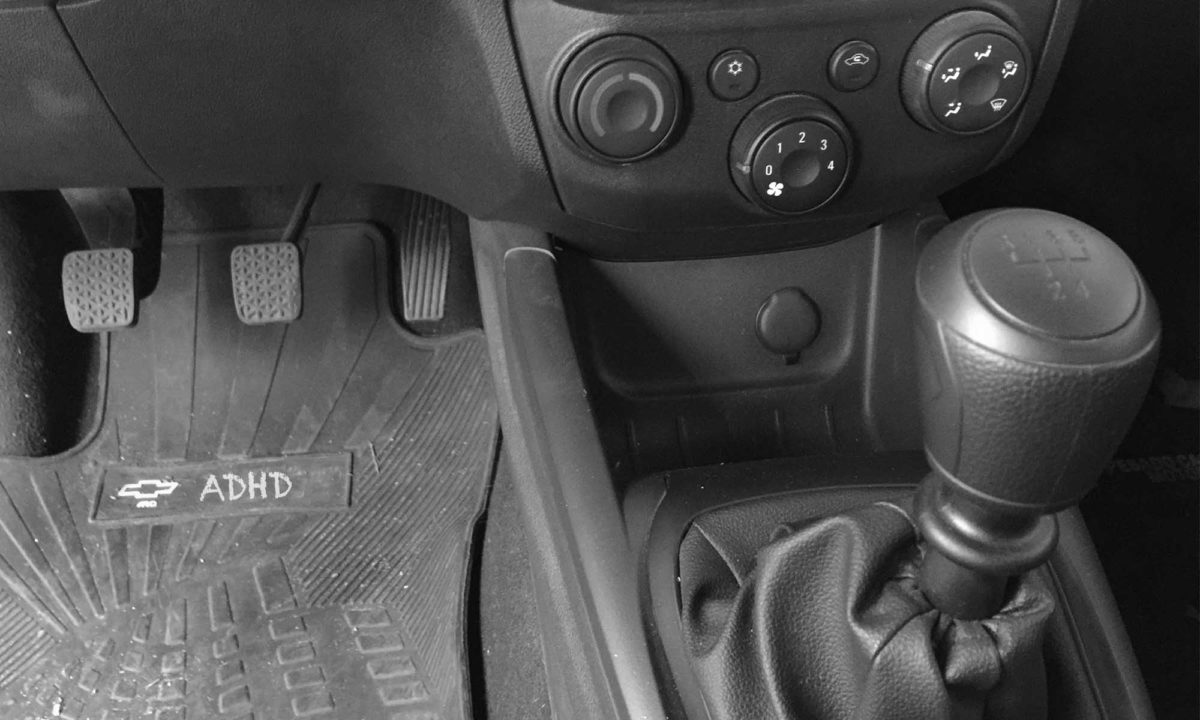
    Thinking about an answer to that question, as I was driving the other day (I drive stick), a metaphor pop up in my head; I’d say I thought something like, “OMG; a neurotypical brain is like an automatic car and a neurodivergent brain is like a manual car; and just like you go to an instructor to learn how to drive, we go to an ADHD coach to guide us on learning about the particularities that are behind driving a “manual brain.”

    Then, I did my best to explain it.

    Quick Intro

    I’ve been driving stick since I learned how to drive, and I love it so much that when I drive a manual car I feel I’m not driving (it’s so easy that is boring!) To do so, as I’ll explain, one must learn how to use three pedals and a stick shift with seven positions, and also how to listen to the engine; the sound of the engine is what tell us what do next.

    It’s like becoming one with the car; one must be completely aware that we’re driving… and this, this makes every ride so much enrichening…

    Now, bear in mind this: a manual and an automatic car are the same (mostly). A few years ago, I got a brand-new Chevrolet with a payment plan and the dealer asked me, “Will you be taking the automatic or the manual one?” The question was simple because the difference between them were superficial (like, having a button to “roll down the window” or not ); but they both had the same horses, the same motor, Bluetooth! Therefore, the main difference relies on how to drive it.

    How to Drive a Manual Car

    Attention peeps! This is cool; in a manual car, there are:

    •  three pedals; from left to right:
      • the clutch (which you press with your left foot)
      • the brake, and the gas or accelerator (which you press with your right foot)
    • and the stick shift has different positions 
      • reverse and five velocities
      • neutral gear
    My manual car ☺️

    And this is how you drive it:

    1. Enter the car and make sure the shift stick is on neutral;
    2. Put the keys on and start the engine; (well, duh)
    3. Press the clutch pedal and while you’re pressing it move the stick to “1”; release the clutch smoothly as you press the gas to drive for half a block or so; you’ll hear the engine asking you for more; then you:
    4. Press the clutch pedal again, move the stick to “2” and press the gas to drive for two blocks or so (always listening to the engine) And once again you,
    5. Press the clutch pedal, move the stick to “3” and – finally – press the gas and start enjoying the ride.

    Then if you:

    • want to go faster: continue pressing the clutch pedal and switching to “4” and then “5”, always listening to the engine;
    • need to stop: press the clutch pedal, move the stick to neutral and press the break.

    Bear this in mind: when you are pressing the clutch pedal to move the stick, you must release it very slowly while pressing the gas; you can’t simply lift your left foot because the car will choke. If you think about it, it’s like learning a choreography.

    It seems a lot… It is a lot; but once you get used to it, it comes naturally; what’s more difficult to learn is to listen to the engine to see when it needs more gas, and how to carefully transition from the clutch to the gas without choking the car.

    An ADHD brain, works exactly like that.

    Driving a Manual Brain

    A neurotypical brain, which is automatic, is easy to drive; you put the keys on, move the stick shift to D and press the gas to “just start driving.” A neurodivergent brain, on the other hand, is manual… and it needs more of our help.

    First, we must decide to get into the car and that is a huge deal; if where we must go is not of our interest, we won’t even bother to find the keys we’ve left “somewhere.”

    Then, we must be aware that we are driving and pay attention to the sound of the engine telling us how much power it needs; and of course, to the signs, the other cars and to those people who don’t cross the street from the corner!

    When we make a switch, we must do it smoothly and step by step; we cannot go from 1 to 3; we must change our gears step by step: 1, 2, 3, 4, full power!

    And, if an old lady wants to cross the street – and we have to release the gas, press the clutch pedal, move the shift stick to neutral and press the stop pedal – by the time grandma gets to the sidewalk, we may have forgotten where we were going to or lose interest in it; hey, we may even go back home thinking, “why did I go out in the first place? Oh… Toilette paper!”

    There is a lot more to it; but the fundamentals of driving a manual brain relies on this: 

    • having interest in going somewhere; 
    • starting with a pause;
    • being aware that we are driving (where to; what’s around us); 
    • listening to the engine to see what it needs; 
    • paying attention also to the transition process to switch gears;
    • do things one by one, following an order;
    • forgive the old lady without having a meltdown.

    So, What’s an ADHD Coach?

    It’s a neuro instructor! Is a person that will guide us to understand how this manual brain works so we can go to the moon and back because, …, yes, manual brains can also fly; and some of them can do it really fast.

    My Jalopy

    While driving a manual brain, we may feel that we’re stuck with a jalopy, with that old car our great grandparent got at an auction… and do you know what? In a way, we are; because when we get in, we see it’s full of surprises, treasures we never imagined there could be.

    In mine, I found in the trunk a map to a fantasy world where only I can go and where I can fly; under the driver’s seat, there’s a mysterious formula that makes my brain race at the speed of light and it’s hyper-awesome! The ceiling is covered with countless pictures of places, people, and things I long to visit, see and feel… And the wheel! O-M-G; the wheel has a silly smiley face over the horn, so every time I run into something that gets in my way, I smile ☺️

    A neurotypical person may wonder, “All of that?” and I’d reply, “Not even close.”

    I drove like an F1 driver for twenty years; with purpose, listening to my engine, being aware of everything around me and absorbing the knowledge from every person I’d meet and their new stories… But then, I crashed more times than I’d have expected.

    During my mid-twenties, I forgot about the cooling system and it ran out of water; and I kept pressing the gas to keep going – without listening to engine – until I broke my manual brain… Life, traumas and my own bad choices literally choked my brain until it went: “kaboom.”

    Maybe if I had known there was also a cooling system I needed to care of, I wouldn’t have failed; but then again, I wouldn’t be here telling you: “Even if you crash your brain into pieces, you can fix it.”

    Last but not least, I never lose my keys; I attached them to something big that I cherish, to something that brings me happy thoughts, so they are always at plain sight.

    … If you’d ask me, driving automatic is totally overrated.

    cark keys with a big cat keychain
    I was not lying ☺️ © neurodivergent.blog
  • ADHD in the Classroom: Strategies to Make the Most of a Class (High School and College)

    To Alicia Maggi: I still think of you when I feel proud,
    wondering if you would be too.

    Some say that we cannot finish anything; I say we don’t waste our time on anything we don’t like. Our awesome brains need happy things; exciting things and reward! But the classroom… It doesn’t seem to be the best place to look for that, right? Classes can result tedious and the reward (the degree) could seem far away. So, how about turning it into a cool place where we could instantly feel rewarded?

    Whether on primary or superior education, the classroom is the same: inside four walls (with windows calling us to chase birds and squirrels) we need to stay quiet, focus on the speaker’s speech instead of their odd choice of outfit, and print in our minds a knowledge that – many times – seems boring, useless, too easy for our royal attention or way to slow in the delivery.

    Those were my challenges, and these were my ways to overcome them: great teachers who realized I needed a push; breaks! certain accommodations and finding a quickly reachable goal that would make feel awesome.

    “Teacher, Make a Plan for My Brain”

    I had a plan in High School: “Why would I waste my time on studying something I don’t like and that I’ll never think of again? I’ll just do what’s necessary to pass.” But, one teacher discovered my lame strategy, crushed it, and probably changed the course of my life.

    She was my history teacher, Alicia Maggi, the tallest woman I’ve ever met, who’d wear huge Tutankhamun earrings and talk about history as if it were her only passion. One time I got a very poor grade on a test, and she wrote on it – with a striking green ink – a big “sixty something percent” and a long note which read, basically, “Why, Laura; Why; Come see me after class.” 

    So I did, and she told me, “Do you know why I wanted to talk to you? Because you can do more; why do you settle for this?” I understood what she was saying, … but there was actually nothing I could do; and I guess she realized that too, because she did it for me:

    Every morning, for a year, she would enter the classroom, greet the class, sit at her desk – dead silent -, open her black leather notepad (while we would all start to sweat), raise her sight and say, “María Laura.” I’d stand up, praying I could focus on at least one word of her question, and I could manage to come up with “something.” Me being summoned, every single day, was so evident that it became the joke of the class.

    Back in the early 90s, Alicia did her best, probably thinking I was a lazy girl with potential; I tried to answer to her encouragement, but it was hard, so hard; an ADHD brain working with nothing but willpower, can lead to a devastating frustration… however I did get through her class because she’d make it fun; listening to her was like watching the coolest History Channel documentary…and, honestly, I just wanted to make her proud.

    These days, we can tell our teachers we have ADHD, and they can develop for us an IEP (individual education program) [1]

    Put Me on the Front Seat

    I used to pay so much attention… in the teen magazine I’d have hidden below my desk, talking and passing jokes in little pieces of paper, hand to hand among “those twelve in the back.” After many visits to the Mother Superior’s office, saying, “Sorry, I won’t bring them again; by my fault, by my fault, by my most grievous fault,” magazines were: gone; and since I needed to close my mouth and pay attention, I was brought: to the front.

    Little they knew (or much did they?) that – one way or another – I would have to talk; and so a new version of me was born: that one who always has her hand up. Since that first year of High School and throughout every single course and career I attended, I sat on the first row, willingly, because I knew it would:

    • Put me on the spotlight, keeping me from talking to other people or chasing squirrels with my sight;
    • Force me to pay attention… at least some;
    • Push me to participate, to raise my hand, which would give me another benefit: getting rid of my doubts, right there, so I wouldn’t have to lose my precious royal time studying at home.

    Seating a student where there are fewer distractions [1], it’s been always a must for teachers to keep students quiet; but, for those of us with ADHD, is not only helpful but necessary.

    In the US, there are two laws that govern special services and accommodations for children with disabilities: The Individuals with Disabilities Education Act (IDEA), and Section 504 of the Rehabilitation Act of 1973 [2]

    I’ll Set a Goal to Raise My Hand (And Make It Fun!)

    Does raising hand seem something that could intimated you (or your child)? If so, here are a couple of things to bear in mind.

    First, “We are in the classroom, to learn” (Mind-blowing, right?) We don’t have to have the right answer, not even the right question! We are there, to learn. A professor once said to my class, “There’s no stupid question;” I’m so grateful for that. The learning process is not only about acquiring knowledge, it’s also about learning how to get that knowledge. Teachers hold the wisdom, and it’s our job to squeeze their brains by any means. 

    Second, our ADHD brain holds some special powers: speed, creativity and an “out of the box” way of thinking. During High School, I used to come up with questions that teachers would answer by saying, “Good one, but we’ll see that in three months” (that was my hyperactivity processing data at speed light) and, “Oh… Ok… That’s something we should discuss” (out of the box!) 

    As I became aware of this during my college years, I used to get ready for the classes only to come up with the oddest question to ask the next day; it was fun! (Sorry teachers; we do need our fun time)

    Needless to Say, “Give me break!”

    I attended a High School that instructed me to become an educator, so I experienced my own learning process as I was learning also “how to learn and how to teach;” there they taught us the human brain can hold its attention for 40 minutes before beginning to drop, and they put it on practice: we used to have 10-minutes breaks every other 40 minutes, religiously, and for me it worked like a charm.

    At University, however, professors were always in a rush to cover the curriculum of the day, because “there’s so much to cover and so little time!” (I wonder if this happens in other countries…) We did complain about it; it’s their job to make a schedule that fits the content! But one could guess the answer we received. Therefore, I’d take my own breaks; countless times I raised my hand to say, “Could we please stop for ten minutes?” and all the class would sing along, “Yes! Please!” (Eventually my classmates began looking at me with a, “Do it, do it now!”)

    To this day, I set a timer to write or study, and to take breaks. The IEP and 504 Plans, also mentions, “Allowing breaks or time to move around” [2]

    To Conclude

    We can find pleasure and reward in the classroom; I did it without knowing I had ADHD, encouraged by one good teacher who held my hand and wouldn’t let go; I did it by listening to myself, acting accordingly, asking for what I needed, and by making my learning process fun, as it should be! You can do it too.

    These days are good for us because the Law and Institutions are beginning to realize the importance of giving us extra help; however, there are still myths and ignorance, so it’s up to us to keep our head high and make to perfectly clear that we are not lazy; in fact, we’re the opposite! With proper guidance, we can reach the goals that we are imposed, and even go further!

    The learning process is like a puzzle; teachers give us the little pieces for us to put together; it may seem endless, boring, but once we focus on it, once we see the whole picture by zooming in and out with our hyperfocus, we’ll surely end up arranging the pieces to create a puzzle no one imagined was there.

    Alicia Maggi handling me my Bachelor’s Degree. Argentina, 1994

    References

    [1] HASSAN, Shirin (MD) 2017. “ADHD and School” URL: https://kidshealth.org/en/parents/adhd-school.html [Last Visit: December, 2019]

    [2] CDC. 2019. “ADHD in the Classroom: Helping Children Succeed in School” URL: https://www.cdc.gov/ncbddd/adhd/school-success.html [Last Visit: December, 2019]